Research

My research centers on computer vision, machine learning, and multimodal AI for robust perception in dynamic and uncertain environments. My dissertation work focuses on tiny airborne object detection, UAV-based visual perception, multi-object tracking, and spatiotemporal reasoning under clutter, motion, occlusion, missing observations, and sensor uncertainty. I am also extending these reliability-driven ideas to GeoAI and biomedical AI, where models must generalize across domains, sensors, environments, and deployment conditions.

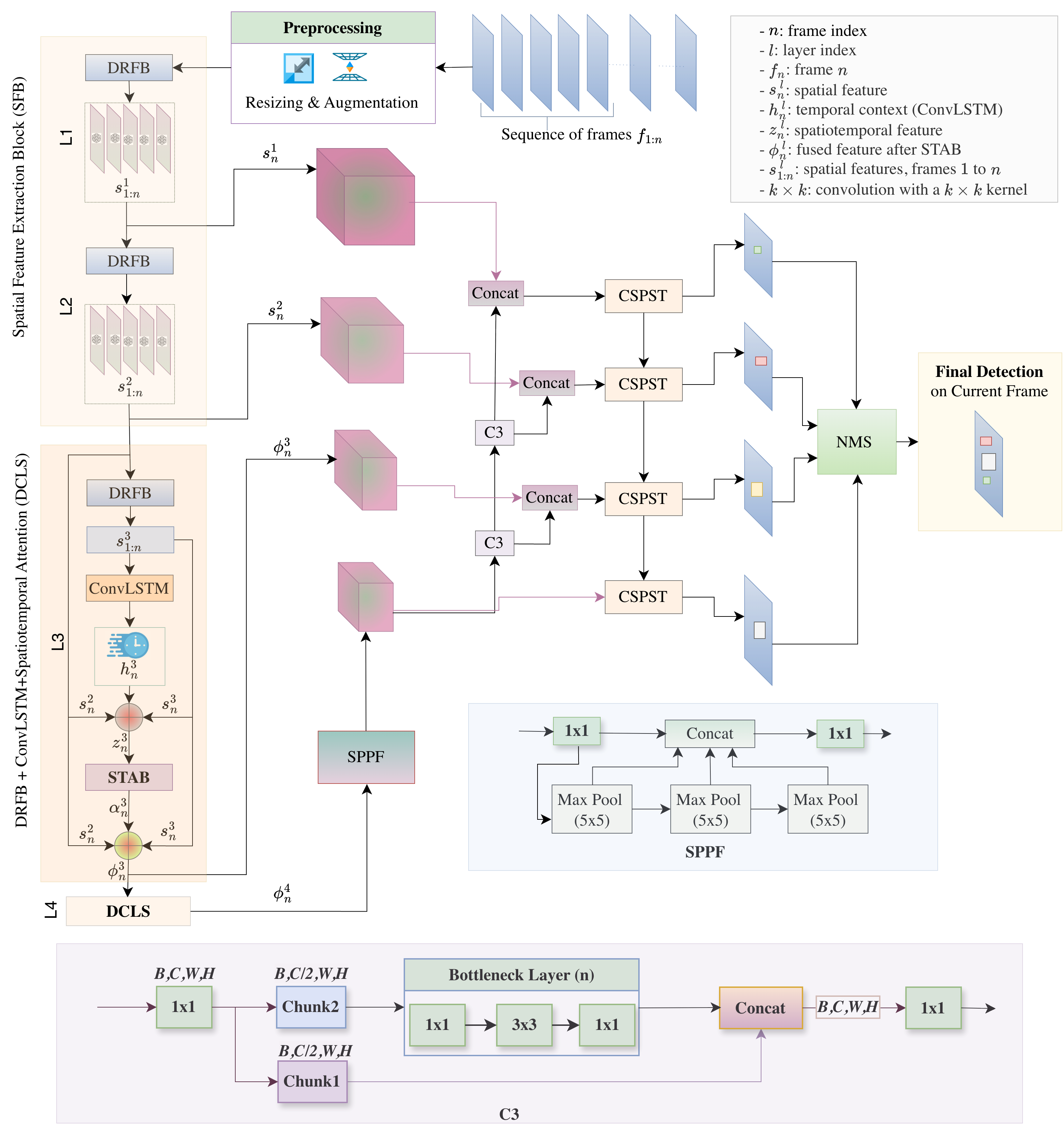
Computer Vision for Tiny Airborne Object Detection

I study small-object perception from moving UAV cameras, where targets are visually weak and often affected by clutter, camouflage, motion, and partial occlusion.

Representative work: STARD-Net, ACM TSAS 2026.

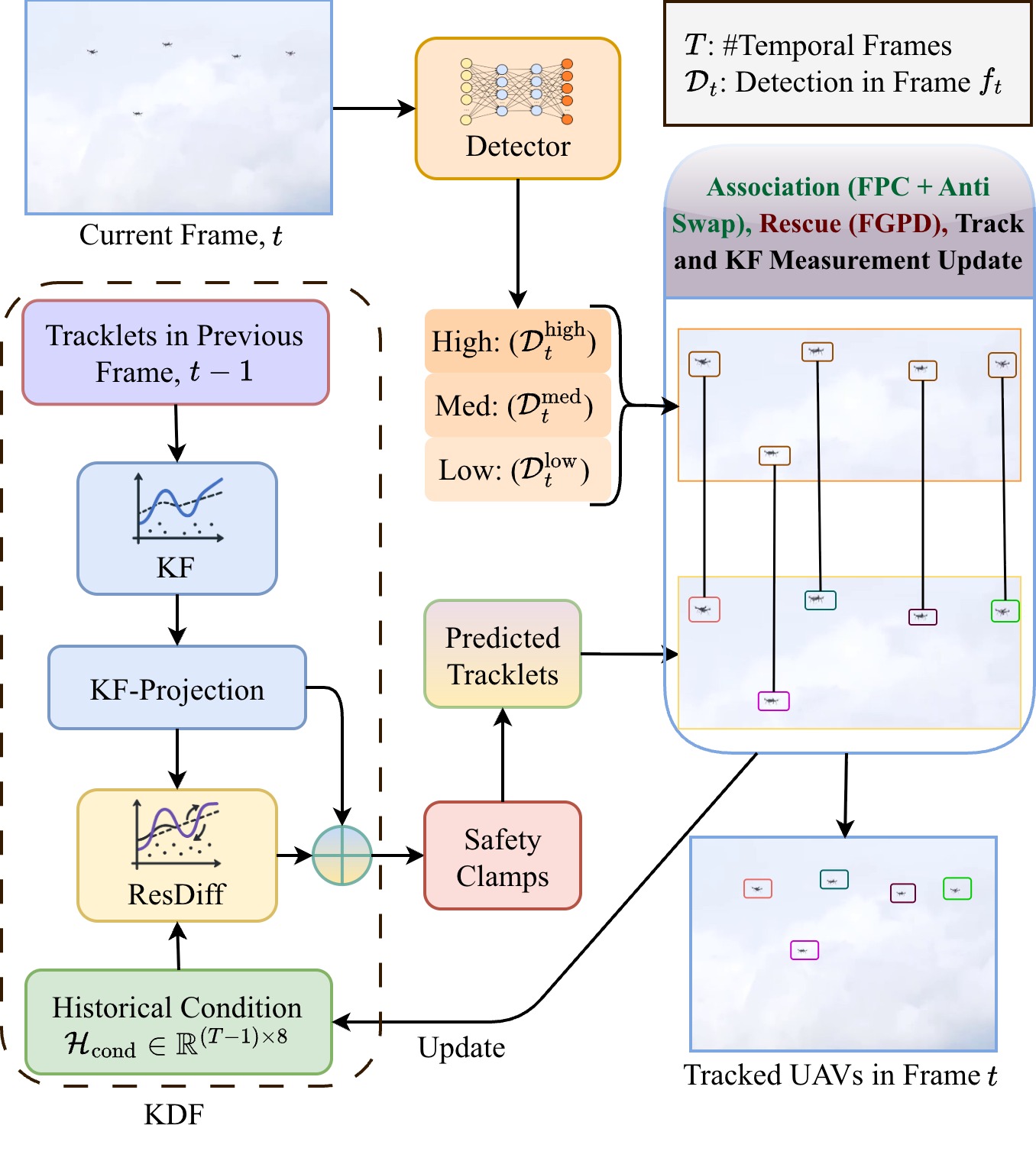
Spatiotemporal Tracking and Multi-Object Association

My tracking work focuses on temporal association, trajectory continuity, missing-observation recovery, and formation-aware reasoning for small, visually similar airborne targets.

Representative work: KRAfT, IEEE ICPR 2026 accepted; V-USDT, IEEE MDM 2025.

Multimodal Learning and Reliable AI

I am interested in models that remain useful when visual and multimodal inputs are noisy, partial, degraded, or shifted from training conditions.

  • Uncertainty-aware inference and reliability analysis.
  • Stress testing under missing observations and degraded inputs.
  • Evaluation beyond clean random benchmark splits.

Multimodal UAV Sensing and Multi-LiDAR Perception

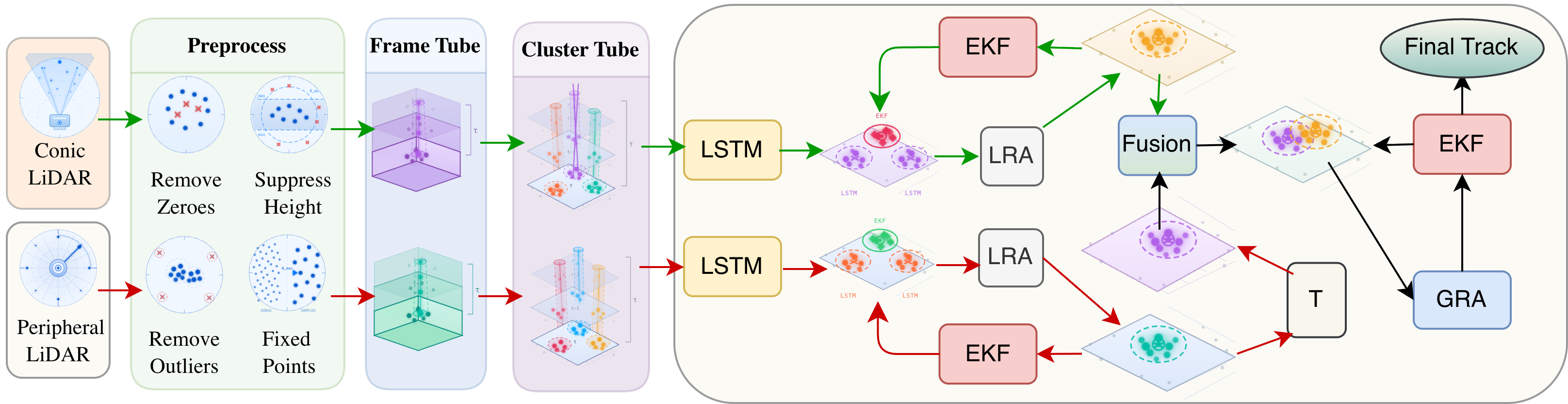
I also work on multimodal UAV sensing pipelines that combine heterogeneous LiDAR streams for small-object perception and tracking. This work studies how to process sparse and asynchronous point-cloud measurements, accumulate temporal evidence, extract candidate object clusters, and reason about sensor reliability under missing or degraded observations.

  • Livox Avia / Mid-360-style heterogeneous LiDAR sensing.
  • Temporal point-cloud accumulation and sparse evidence recovery.
  • Clustering-based candidate generation.
  • Track-centric fusion and reliability-aware updates.
  • Evaluation under sparsity, timestamp mismatch, and sensor degradation.

Ongoing applied AI engineering project: MultiLiDAR UAV Sensing.

Applied AI Engineering

My work includes reproducible AI/ML pipelines for data preparation, model training, evaluation, visualization, and analysis. I value systems that are testable, interpretable, and clear enough for other researchers to build on.

I also use this engineering mindset in practical AI systems such as KeepScoreAI, where the emphasis is on building a usable, maintainable workflow rather than only a research prototype.

GeoAI and Remote Sensing Generalization

I am extending robust multimodal learning toward remote sensing, with interest in Sentinel-1 SAR, Sentinel-2 optical imagery, weather data, and environmental covariates for climate-smart agriculture.

Emerging project direction: Domain-Generalized GeoAI.

Biomedical AI and Radiogenomics

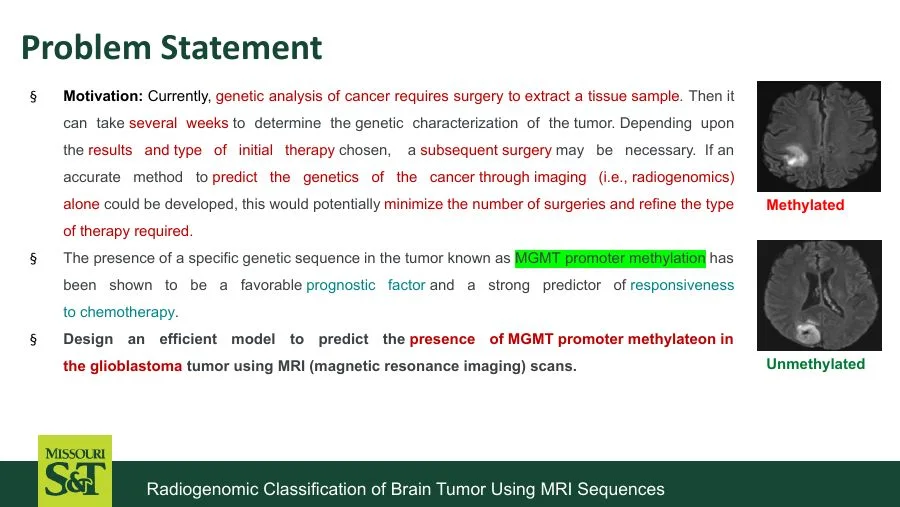
My biomedical AI direction explores MRI-based radiogenomic classification and clinically meaningful model behavior as an extension of robust visual and multimodal representation learning.

Related project: Radiogenomic MRI Classification.

Current Research Agenda

  • Robust UAV-based airborne object detection under weak visual evidence.
  • Formation-aware multi-object tracking and missing-observation recovery.
  • Multi-LiDAR UAV sensing under sparse and asynchronous point-cloud observations.
  • Reliable multimodal learning under uncertainty and domain shift.
  • Domain-generalized GeoAI for agricultural and environmental monitoring.
  • Reliable biomedical imaging and radiogenomic AI.